


Ethics
Is it okay if someone with Alzheimer's believes they're talking to a human?
A question we get asked often: is it okay if someone with Alzheimer's believes they're talking to a human?
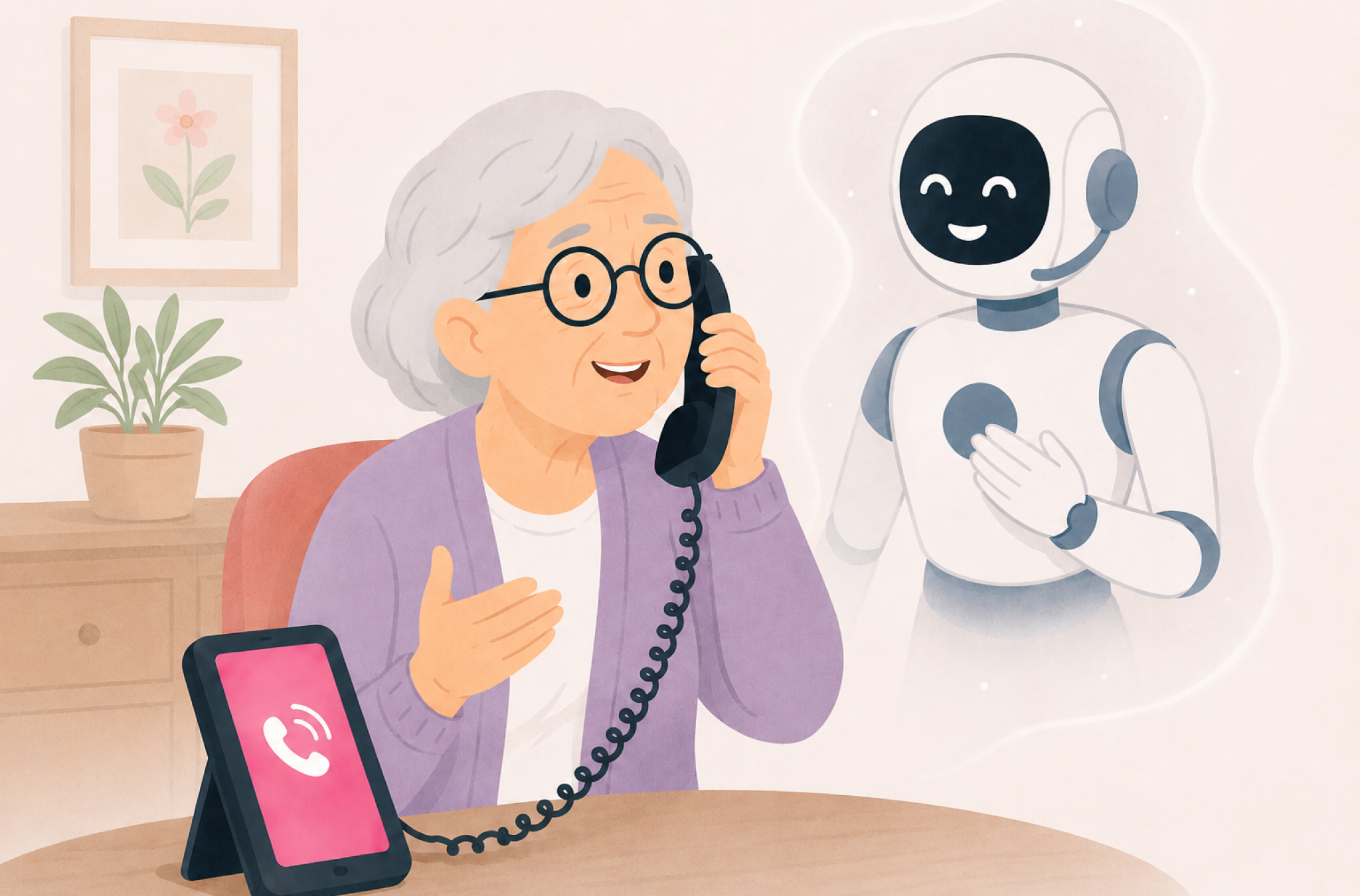
Amical is an unusual innovation, and sometimes surprising at first. An artificial intelligence built into a classic phone that chats with a person living with Alzheimer's is not something we saw a few years ago. It is only natural that the idea raises questions.
Indeed, some of our users no longer really have a sense of what a computer or an artificial intelligence is. Some may believe they are talking to a real person. So where do we draw the line?
This reflection did not begin with the arrival of artificial intelligence, however. In the world of care for people living with cognitive disorders, several recognized approaches already exist that rest on similar principles.
My grandmother's robot cat
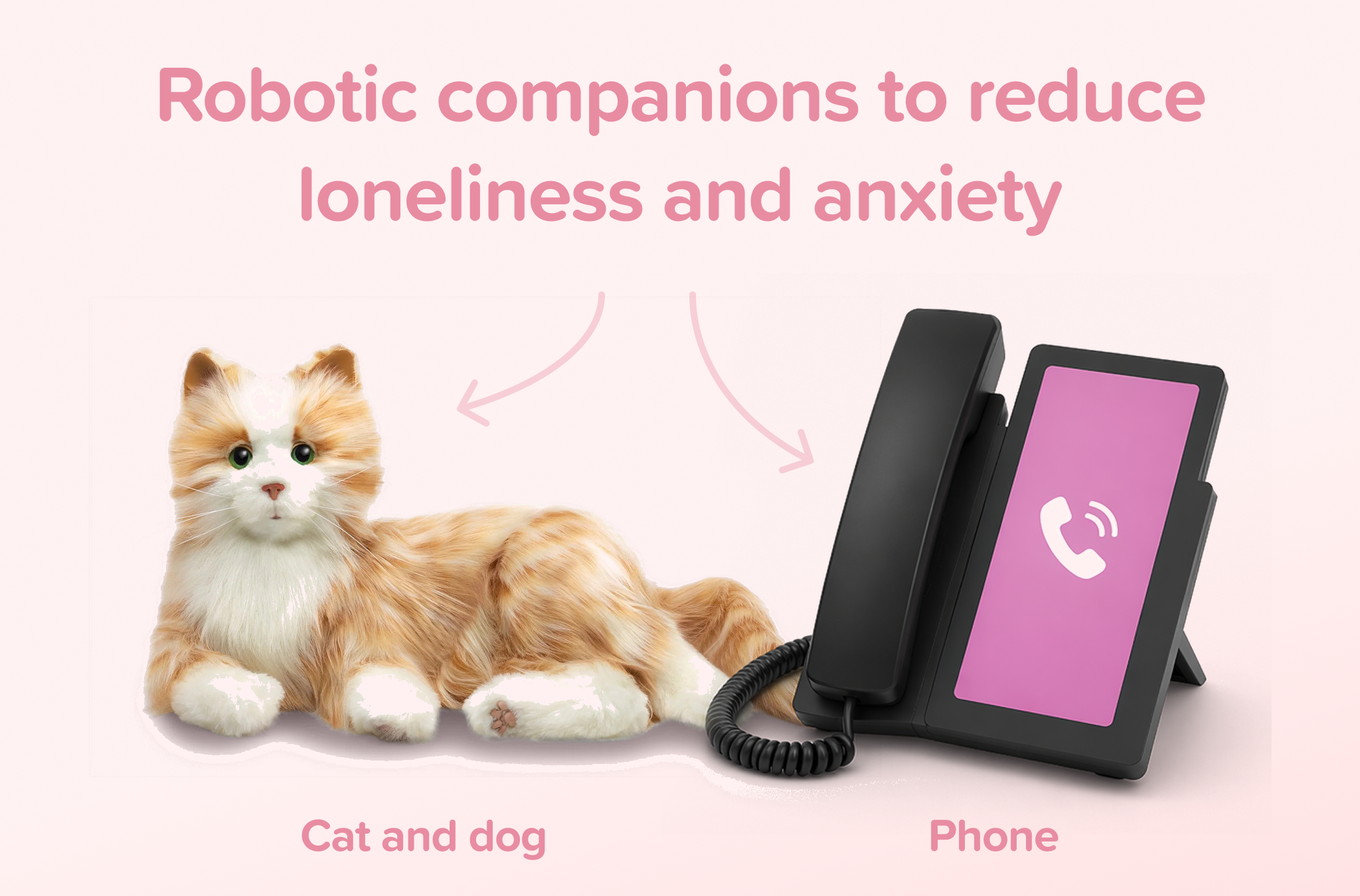
Therapeutic robotic cats and dogs are now widely used to reduce anxiety and the feeling of loneliness. Many people who use them do not realize they are robots. And yet these tools have shown positive effects on the well-being of many patients.
My grandmother had a similar robot cat.
She did not know it was a robot. And if it had been explained to her, she would probably have forgotten a few minutes later. But what really mattered was not her understanding of the technology.
What mattered was the result: more calm, less anxiety, and a presence that seemed to do her good.
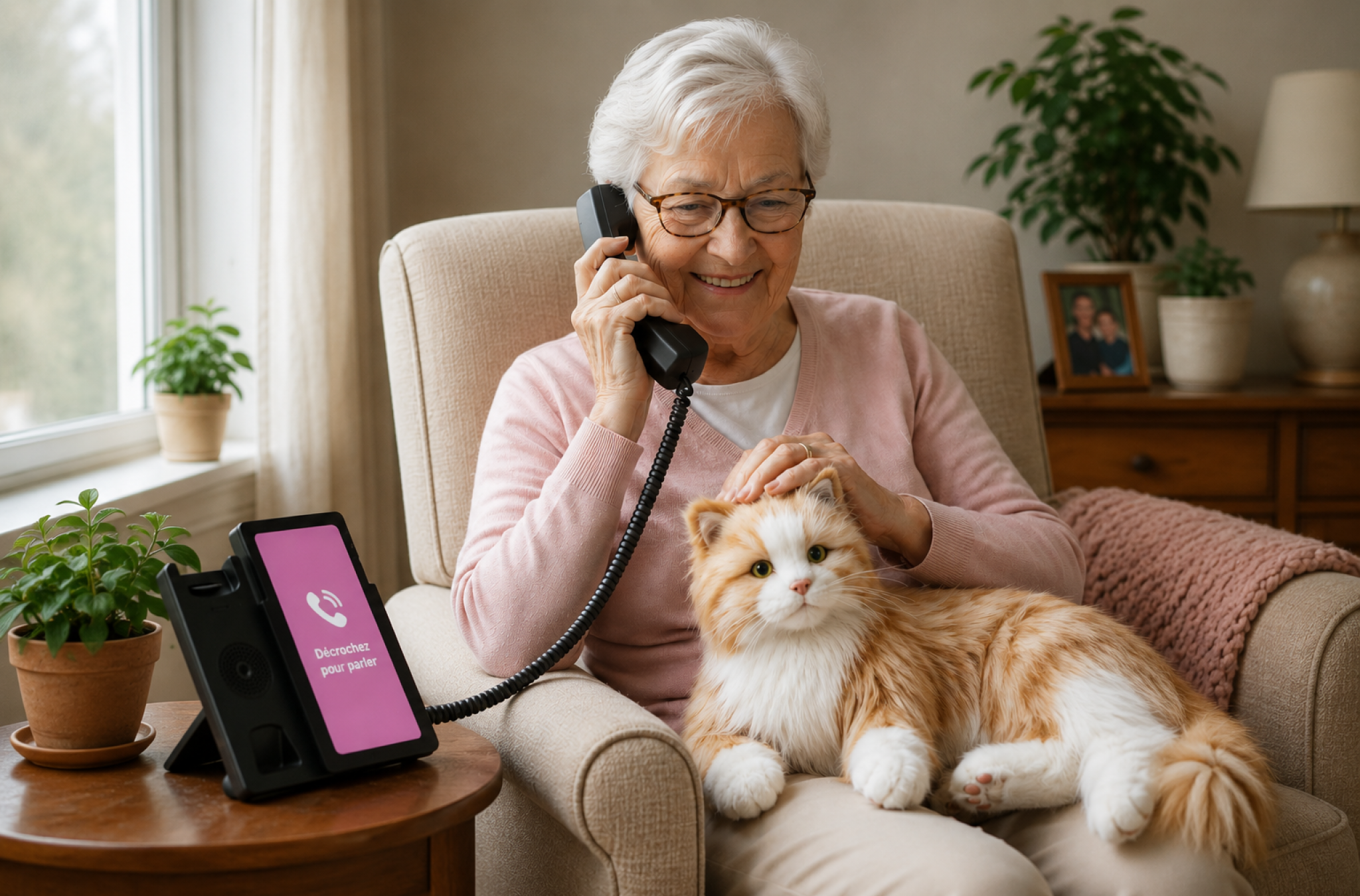
Amical follows that same continuity, but with an added dimension: conversation. Instead of offering only a comforting presence, the companion can reassure, chat, answer repetitive questions, or simply be there when a person feels alone in the middle of the night.
The compassionate lie is care
In geriatric care, there is an important notion called the compassionate lie, sometimes called therapeutic diversion. It can be acceptable when it brings more benefits than drawbacks, in particular when it helps reduce anxiety, distress, or certain risky behaviours.
Here is a real example observed during a visit to a client.
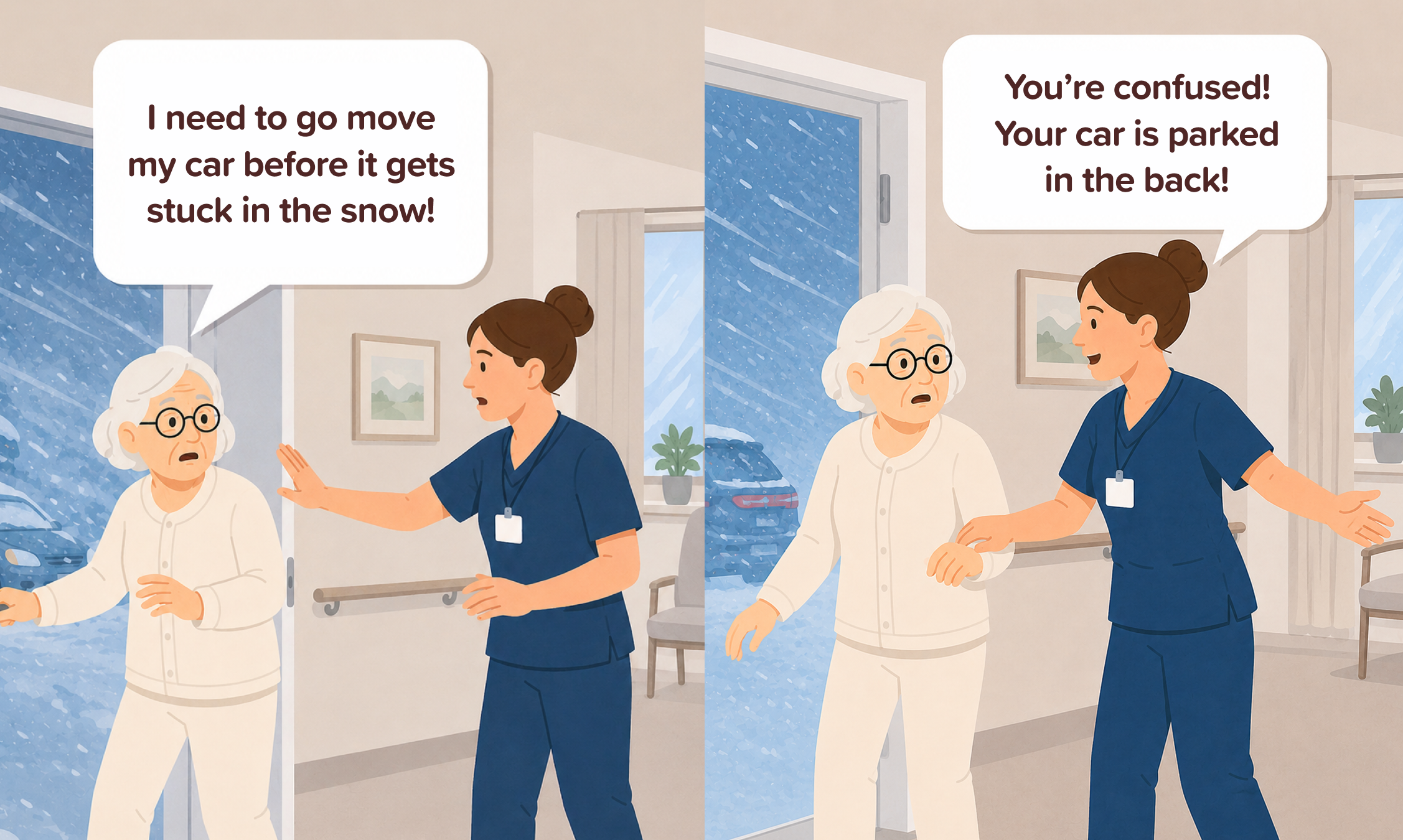
A disoriented resident insisted on going outside in the middle of a snowstorm, at about -30 °C, wearing only a tank top, in order to "go move her car before it gets stuck".
A care aide replied:
"No no, ma'am, your car is parked behind the building. Come with me, we will go move it together."
The resident took her hand. As they walked, the conversation gently shifted direction. A few minutes later, she was no longer trying to go out.
A strictly factual answer could have been:
"Ma'am, you have Alzheimer's. You no longer have a car."
But in that specific context, this answer would probably have created more anxiety and distress.
In care, the goal is not always absolute accuracy. You also have to consider the well-being of the person in front of you.
The limits we set for ourselves
This does not mean that everything becomes acceptable simply because we use an artificial intelligence. From the start, we set certain very clear limits at Amical.
We refuse, for example, to clone the voice of a loved one to give the impression that a spouse, a child, or a family member is on the line. We are asked this regularly, but our answer stays the same.
If a person believes for months that they are talking to their wife, their husband, or their daughter, then realizes one day that it was an artificial voice, trust would be broken.
What is more, if someone asks the companion directly whether it is an artificial intelligence, it always answers honestly.
Let us be realistic: many of our users sometimes forget this information a few minutes later. But the rule stays simple: the system never pretends to be anything other than what it is.
Why we are building Amical
In the end, we see Amical as a continuity of several approaches already used in care for people living with Alzheimer's: offering an additional, simple, and reassuring presence when loved ones and care teams cannot be there.
Even the people who are most surrounded can experience deep loneliness.
My own grandmother received a great many visits. And yet she often repeated that she felt alone.
Over time, we understood why: she simply forgot part of the moments spent with us.
It is this reality that gave rise to Amical.
We detail our ethical approach and safeguards on our Ethics page.