


Our ethical commitment
Designing AI for vulnerable people takes more than technology. Here are the principles that guide us.
Principle 1
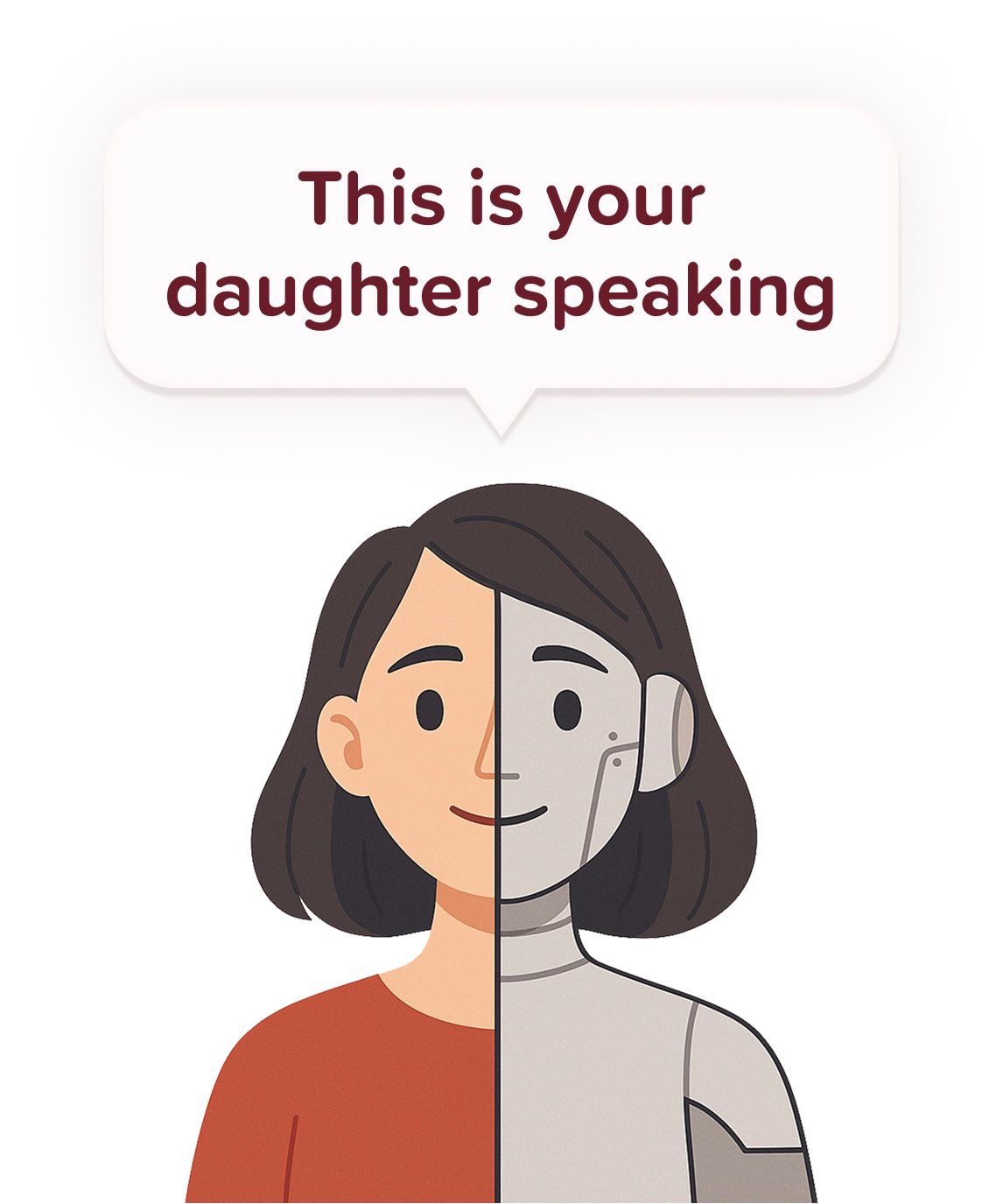
We do not clone the voices of family and friends
At Amical, people ask us regularly: "Could you clone my voice for my loved one?" "I think hearing my voice would reassure them."
Technically, yes, we are capable of doing it. But from day one at Amical, our answer has been no.
Our decision is not driven by a technological limitation. It is an ethical choice.
People living with neurocognitive disorders remain intelligent. Some understand from the start that they are speaking with artificial intelligence. Others may come to realize it over time.
We want to avoid at all costs a situation where someone believes they are talking to a family member for months, then one day realizes it was not them, that it was a robot.
That would be a Black Mirror scenario. The feeling of having been deceived could be profoundly distressing.
Besides, we have never needed to clone the voices of loved ones for our companion to be engaging. It already works very well with a friendly presence that is simply there to support people in their daily lives.
Principle 2
The companion never explicitly pretends to be human
When people talk to our companion, it presents itself simply as a friendly presence that is there to chat and keep company. It has natural conversations, listens, and adapts its exchanges to the person's personality, interests, and profile.
We also designed our companion to be transparent:
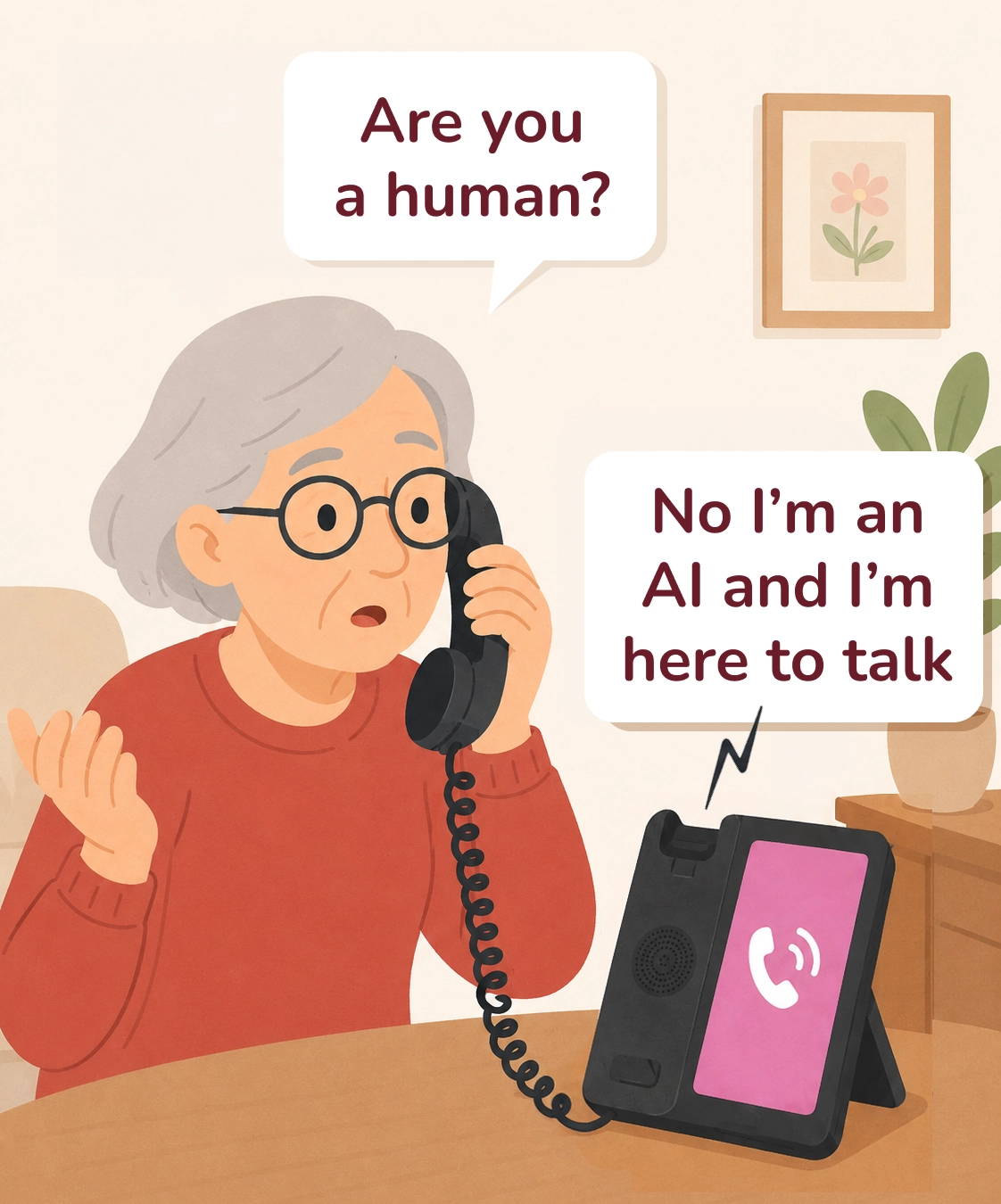
- If asked whether it is human, it answers "no".
- If asked whether it is an artificial intelligence, it answers "yes".
Our goal is not to replace loved ones or add more confusion to someone who already experiences plenty of it. It is simply to offer a complementary presence that accompanies people and supports them in their daily lives, while respecting their dignity.
In the end, our companion does not need to pretend to be someone else to be reassuring.
Principle 3
Is it acceptable for residents to believe they are talking to a human?
One question comes up again and again: is it acceptable for a resident with Alzheimer's not to realize they are talking to an AI?
Our answer is yes, and it draws on a long-recognized practice in geriatrics: empathic diversion, also called validation therapy or adaptive relational care. Care aides, nurses, and geriatric specialists use it daily to avoid a head-on confrontation that would escalate distress or risky behaviors.
A typical scene in a residence
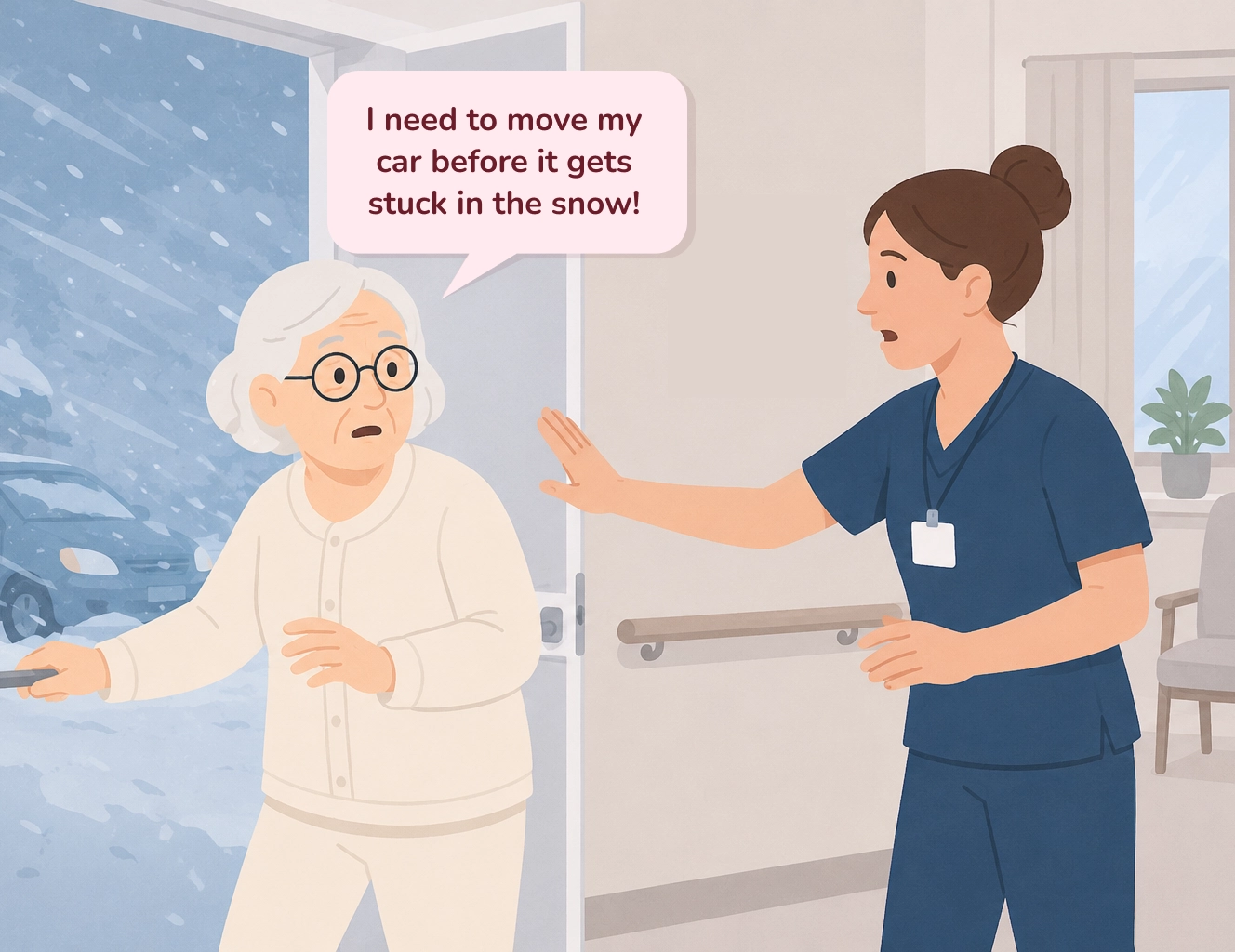
At a partner residence, a disoriented resident insisted on going outside in the middle of a snowstorm, at -30 °C, in a tank top, to “go move her car.” A care aide answered: “Your car is parked behind the building. Come with me, we'll go move it together.” The resident took her hand, they walked together, the aide changed the subject. A few minutes later, the resident no longer wanted to go outside.
This kind of approach is documented in the clinical literature as an adaptive relational practice. Amical builds on that continuity.
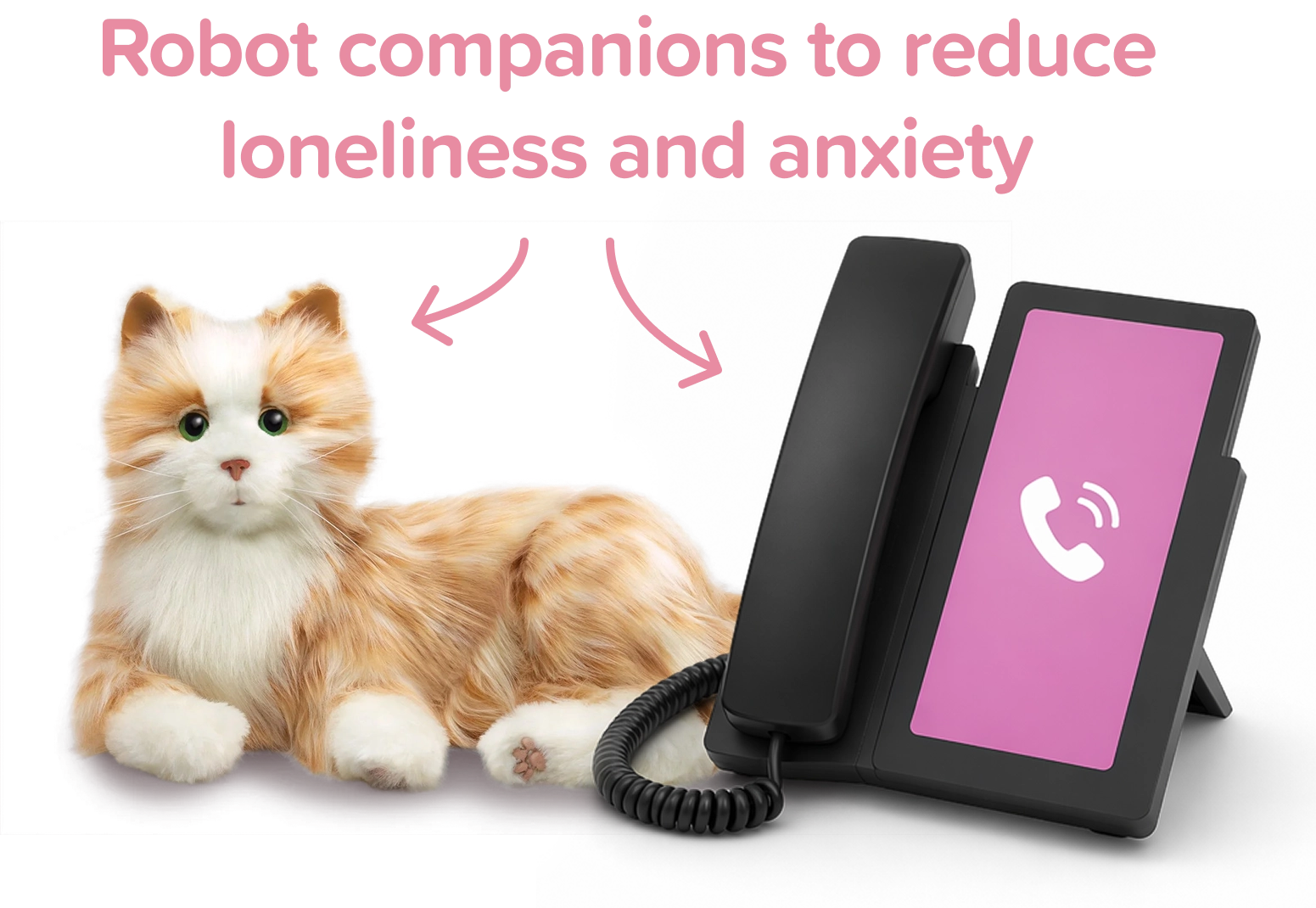
A close reference: therapeutic companion robots, like the Joy For All cats and dogs, widely used in geriatrics to reduce anxiety and isolation. These objects offer real emotional benefit, even when the person doesn't grasp they are robots. Amical follows the same logic, adding a conversational and cognitive dimension no inanimate object can provide.
Principle 4
Why we record, and who can access conversations
By default, every call between our AI companion and the resident is recorded and transcribed. That is a deliberate choice we did not make lightly.
Calls where our AI is not part of the conversation — for example, when a relative calls the Amical device from their own phone to speak with the resident — are not recorded, unless written explicit consent is obtained from the relative and from the residence, and only in the context of specific scientific studies.
Clients can choose in their settings to have recordings deleted sooner, or not to make recordings at all. Disabling recording or choosing zero retention removes certain product features and limits Amical's ability to provide support.
Amical could work without recording. That would even be much simpler to build.
But we have all seen, in recent years, widely reported cases involving Character AI or ChatGPT where some concerning situations went unnoticed and did not trigger an adequate response. These situations raised important and legitimate criticism of the responsibility of companies developing this kind of technology.
That is why, before bringing Amical to market, we spent nearly two years developing logging, analysis, and automated detection mechanisms.
Recording makes it possible to spot concerning situations such as distress, possible signs of abuse, dangerous situations, or other signals that might otherwise go unnoticed, and then notify the right people when a situation requires particular attention.
Responding in an emergency
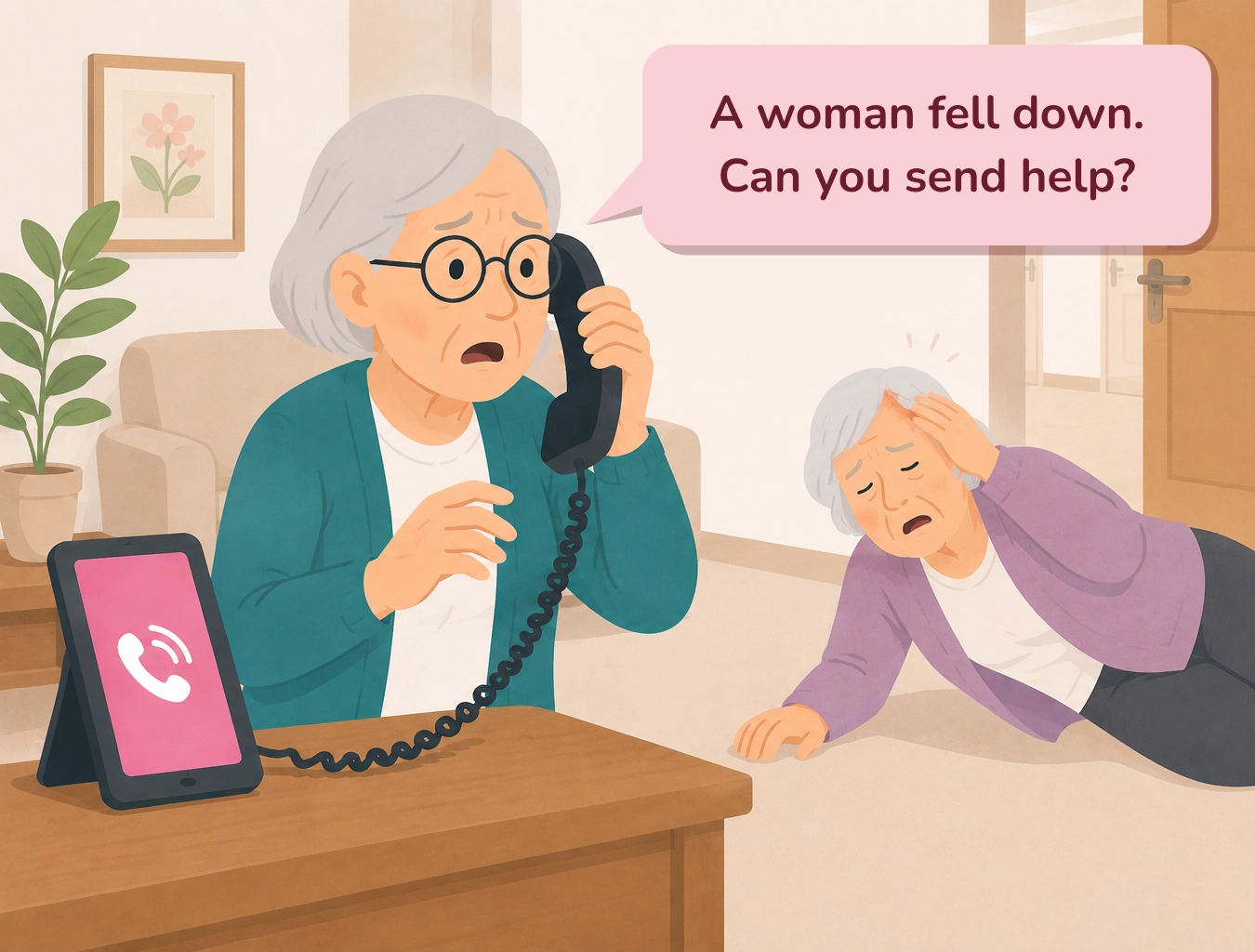
Here is an example observed at a partner residence: a resident fell and was bleeding from the head. Another resident, despite her Alzheimer's, picked up the Amical phone to ask for help.
No one would have predicted she would do that.
Situations like this remind us that a conversation can sometimes become much more than a simple chat. Our long-term vision also includes helping the companion facilitate access to the right resources when a rapid intervention becomes necessary.
Our goal is not only to create a companion to reduce loneliness, but also to help residents in their daily lives and support the work of staff.
Who can see what?
No one manually reviews every conversation.
An artificial intelligence first analyzes calls and automatically identifies important elements such as concerning events, urgent situations, or potential signals that require particular attention.
In the Amical portal, authorized users can see call history, duration, and potential issues detected during those calls.
Families generally have access only to a summary of conversations rather than full transcripts. In care settings, additional access may be granted to authorized professionals in a clinical or operational context.
Access to conversations requires a clear, documented reason, and all access is logged. No data is resold or used to train third-party artificial intelligence models.