


Soothe. Stimulate. Alert. 24/7
Amical is built for residences caring for people living with a cognitive disorder. Designed first for memory care units and intermediate care homes. The companion also adapts to specialized care settings and general senior living.
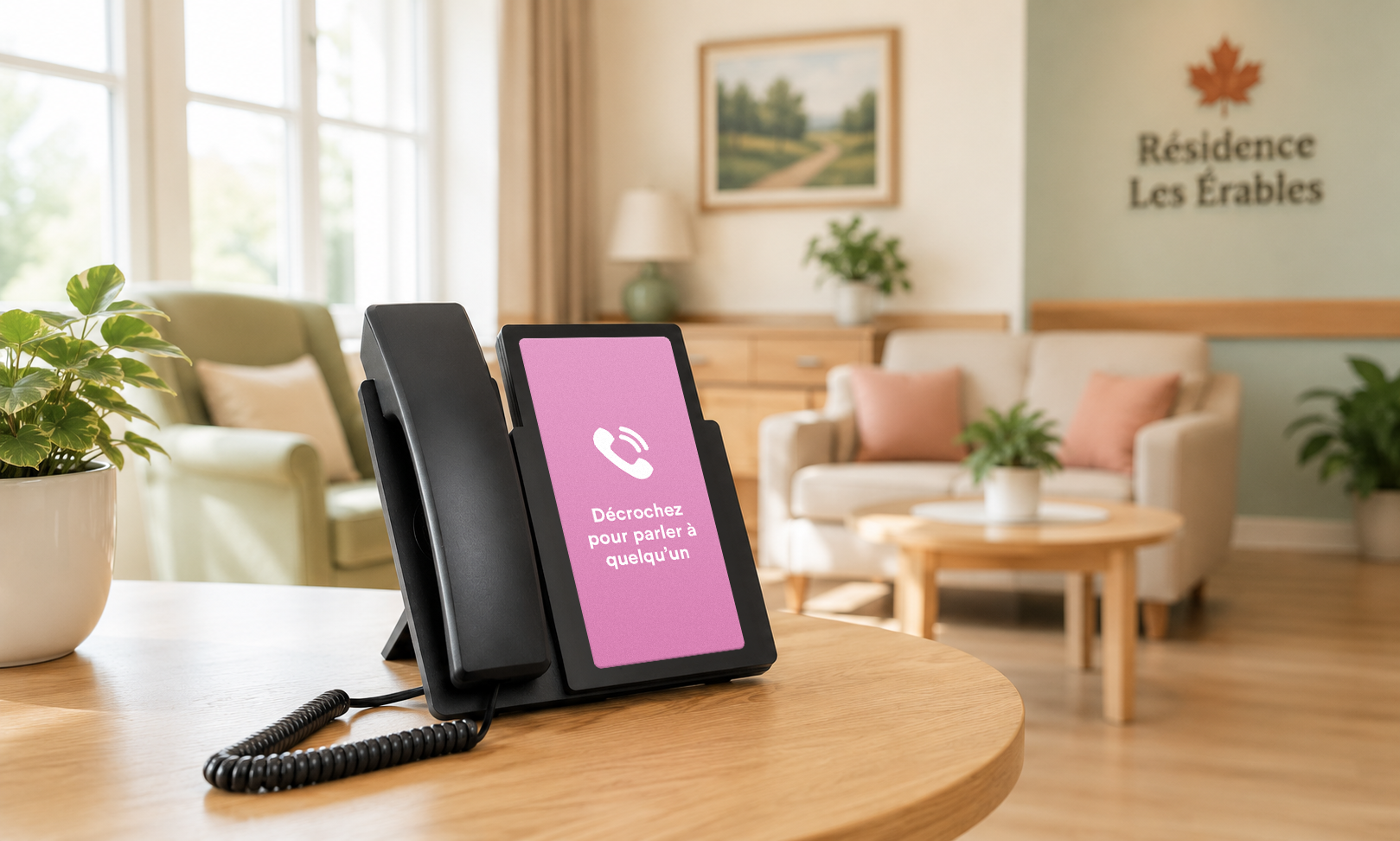
Where Amical works
Four settings, one clear priority
- Priority 1
Memory care and secured units
Wandering, disorientation, BPSD, emergency medication. Residents can no longer use a smartphone. Amical gives them a familiar voice at any hour, and flags the conversations that need attention.
- Priority 2
Intermediate care homes
Moderate to severe loss of autonomy. Chronic understaffing. Amical fills the quiet hours, evenings, nights, and weekends, without adding to the workload.
Specialized living environments
Maison Martin-Matte, homes for people living with intellectual disabilities. The companion adjusts its language, pace, and topics to each resident's cognitive profile.
- On request
General senior living
For residents who feel isolated in the evenings and on weekends, even autonomous ones. Less of a priority in our deployments, but possible.
Conditions served
Not just Alzheimer's
Amical is built for people living with a cognitive disorder, regardless of its cause. The companion automatically adapts its language and pace.
- Alzheimer's disease and related dementias
- Traumatic brain injury (TBI)
- Stroke aftermath, vascular dementia
- Intellectual disability
- Autism spectrum disorder
Why it works
Designed with a committee of geriatricians, psychologists, and occupational therapists
Three principles guide every conversation.
Adapted to cognitive profile
Shorter sentences. Simpler questions. More pauses. The companion never asks about short-term memory: it's anxiety-inducing, and useless.
Silence is respected
The companion gives the person time to search for words. No rushed follow-ups. The conversation unfolds at the resident's pace, not the AI's.
Empathic diversion, not confrontation
When the person thinks they are elsewhere, asks to leave, or expresses distress, the companion uses validation strategies recognized in geriatrics. We don't argue. We accompany.
Operational benefits
Less pressure on your team. More reassurance for families
Less pressure on staff
Pauline engages several residents in parallel, especially during anxiety peaks and at night. Your staff keeps its time for what needs human hands.
Targeted alerts
The system flags only conversations that fall outside the usual: distress, pain, signs of abuse, suicidal thoughts. No noise, no notifications by the dozen.
No IT integration required
We ship the phones. Your staff plugs them in. That's it. No IT system to modify, no network to reconfigure.
A complementary reporting tool
The portal sometimes reveals issues staff hadn't noticed. A support for quality of care, not a replacement.
Testimonials
What we hear from the field
« We have residents who are often gripped by anxiety, who cry, sometimes shout, and don't want to be approached anymore. With Amical, every time, it just works. Because they feel there's someone familiar for them. »
« Picking up the Amical phone is an instinctive gesture for our residents. It's a concrete intervention tool, to take their mind off things, to talk about anything. Its simplicity brings a much-appreciated support to our community. »
Mélissa Masson
Director, Le Vertical, Le Faubourg and Le Pré Blanc residences
« I had a woman who was really anxious. We had her talk on the phone. She talked for 35 minutes. After, she was really smiling. »
« I have greatly appreciated Amical's services. The people we house also expressed great satisfaction. I would be very interested in continuing and expanding our collaboration over the coming years to a total of six or seven Amical phones. »
Martin Nadeau
Manager, Maison des Aînés de Châteauguay, CISSS de la Montérégie-Ouest, Santé Québec


Deploy Amical in your residence
Device fleet, team portal, and alerts, we support you from first setup through day-to-day operations.